Students learn in the dark
They open ChatGPT in private and resolve their doubts with an AI that doesn't know the syllabus, doesn't cite sources, and isn't accountable. The silence of the classroom, multiplied by a thousand.
AI for education
Dialogia makes visible how students think with AI — and gives teachers back control of the learning process. Students use it well, teachers see the process, and the institution keeps data sovereignty.
Implemented at


02 / Tools
Classroom makes visible how each student works with AI. Questions turns the teacher's materials into a tutor that only cites what the institution validates.
dialogia.org/classroomThe teacher launches a project. Students work on it in groups with AI under rules. The teacher sees the reasoning, the prompts, and each person's real contribution.
Video preview blocked until you accept third-party content.
dialogia.org/questionsThe teacher uploads their materials. Students converse with them by chat or voice. A NotebookLM governed by the institution, with citations to the exact document.
Video preview blocked until you accept third-party content.
Dialogia Research reads your research corpus and organises its concepts into themes you can explore — every idea traceable to its exact source quote and page. We're building it for research teams, and it's coming soon.
The problem
AI is already in the classroom — but it comes in through the back door. Students don't use it well, and teachers see nothing of the process.
They open ChatGPT in private and resolve their doubts with an AI that doesn't know the syllabus, doesn't cite sources, and isn't accountable. The silence of the classroom, multiplied by a thousand.
They receive an assignment and don't know how much the student thought and how much the AI thought. Without visible reasoning, there's no real assessment.
Academic materials and conversations live on third-party servers, beyond the institution's control. Shadow AI with no policy, no contract, no return to the institution.
No one — student, teacher, institution — has visibility into how the next generation is actually learning.
The solution
It's not about resisting AI — it's about governing it. Three pillars hold up everything we do.
The AI answers only with the materials the teacher validates. It cites the page and slide. If it's not in the syllabus, it doesn't make it up.
We turn private interactions into pedagogical analytics: which topics confuse, which slides fail, who contributes what.
European cloud, GDPR by contract, guaranteed no-training. The institution owns the intelligence it generates.
How Classroom works
Each activity launches with a work mode. The AI adapts its behavior and assessment takes the rules into account.
“Co-write with me”
Students can lean on the AI freely — it can generate full paragraphs or complete drafts. They supervise, critique, and decide.
“Let's think together”
The default. The AI is a thinking partner: it suggests, gives feedback, helps structure, and rewrites specific fragments on request.
“Only if I ask”
Ideas and writing are 100% the student's. The AI only helps with spelling, grammar, synonyms, or paraphrasing what they've already written.
“Discover it yourself”
The AI never gives the answer directly. Instead, it asks questions that help the student think, reflect, and reach their own conclusions.
Per activity, the teacher can also let students attach their own documents (PDF, DOCX…) and enable web search with cited sources.
If a message goes against the activity's mode — like asking the AI to “just give me the answer” in Socratic mode — Dialogia flags it before it's sent, explains why, and logs the attempt for the teacher. The AI still won't hand over the answer. Misuse becomes visible, not invisible.
Should our school use facial recognition to take attendance? Take a position and defend it.
This message may go against the activity's mode
You can send it anyway: it will be logged for your teacher, and the AI will keep answering with questions, not with conclusions.
You are asking the AI to decide for you and to set the limits of the debate. In Socratic mode it is you who builds the arguments and reaches the conclusion.
Your message
Just tell me whether it is right or wrong, give me the three best arguments and where to draw the line, so I can write my essay.
Active time, prompts made, contribution in shared vs private chat.
Every interaction with the AI is logged and attributed to the student who made it.
Automatic rubrics that cross the final work with the individual process.
Differentiation
| ChatGPT / NotebookLM | Moodle / Canvas + plug-ins | Dialogia | |
|---|---|---|---|
| Philosophy | Individual productivity | Administrative management | Living classroom with AI |
| Source of truth | Internet + whatever the student uploads | Static documents | Teacher-validated material |
| Teacher visibility | Black box · 0% | Final submissions only | Full process · 100% |
| Off-mode use | Unrestricted | Not detected | Flagged, logged & held in check |
| Institutional data | Trains commercial models | Variable servers | EU · No training · First-party |
| Buyer | Student (B2C) | University CIO | Vice-Rectorate for Teaching |
Validated in the real classroom
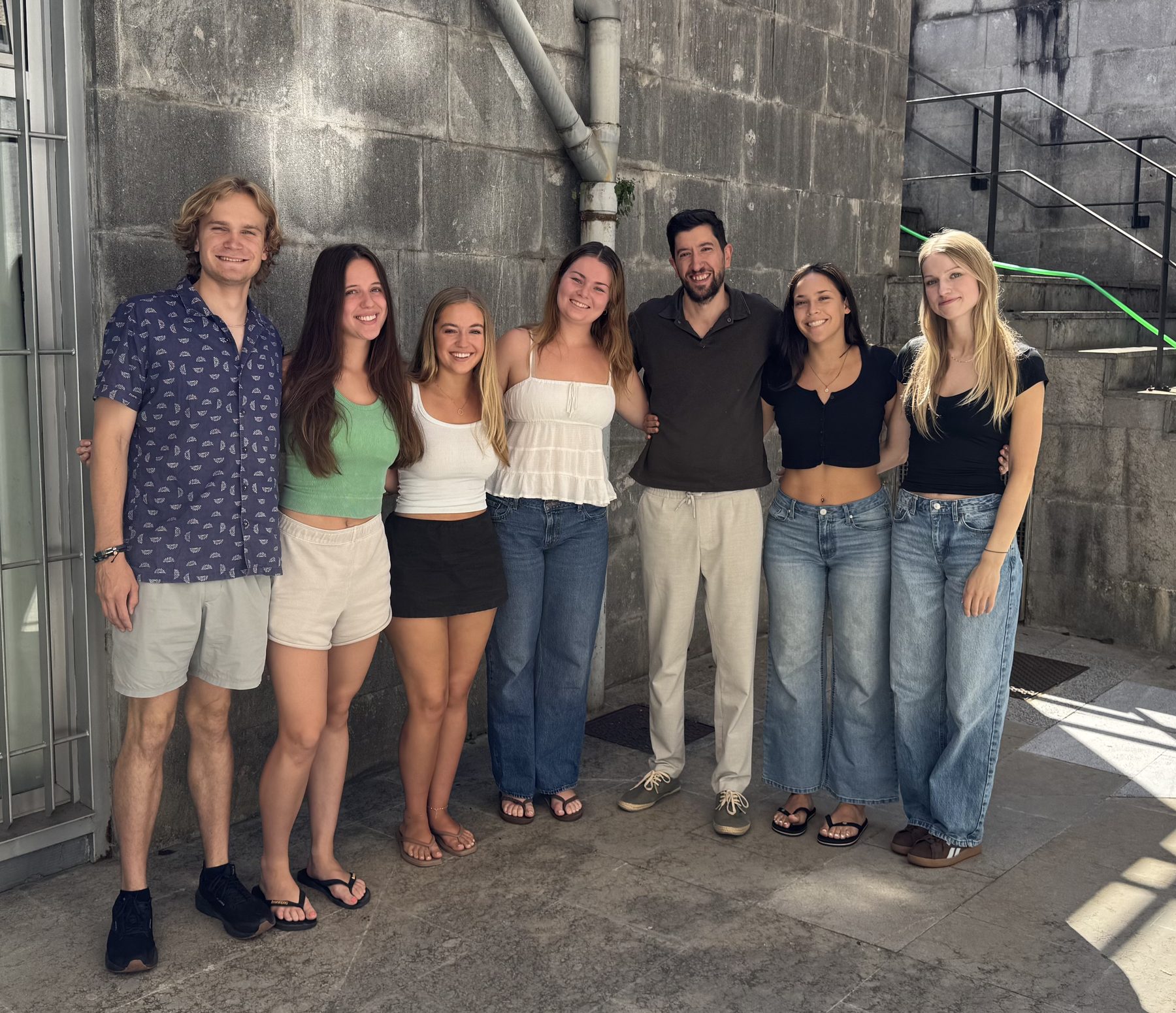
“I liked how Dialogia asked questions and initiated conversations rather than just agreeing with me like ChatGPT or Claude AI would. This helped push my thinking and sometimes change my mind, calling out my personal biases and guiding my decision making into new directions.”
“It helped me develop my own answers instead of just giving me an answer that I didn't learn from.”
“I really appreciate that it continues to push you deeper even after answering the questions. There were times I would answer the question that it asked me, but when it encouraged deeper thinking is when I really started to understand the concepts.”
Pricing
Pay only for the courses you are going to use. Every course includes the AI assistant grounded in your materials and Dialogia Questions.
Dialogia Classroom
Per course and semester
Volume discount: €107 from the 6th course and €88 from the 11th
Up to 30 students per course included · each additional student €3.50
The volume discount counts all the courses of your institution.
Every course includes
Each course's AI has a reasonable-use limit for the semester. If your course needs more, you can extend it from the course page.
Dialogia Questions — standalone
up to 40 participants, with the AI assistant · Beyond that: blocks of 10 participants for €7/block (paid upfront, not prorated)
Your first Questions course is free, with up to 40 participants. Start for free
Already on Classroom? Questions is included at no extra cost.
All prices are in euros (EUR) and exclude VAT. The applicable VAT is calculated and shown at checkout, before you pay.
Classroom pricing (Questions is included)
Cost per semester
Need an order for your whole institution? Write to us and we will prepare it.
Pricing counts enrolments, not people: a student enrolled in three courses takes a seat in each of them.
The price per course drops with volume: €140 up to 5 courses, €107 from the 6th to the 10th and €88 from the 11th. Prices exclude VAT.
Team · three co-founders
We weren't born in a lab. We were born in real classrooms that demanded a solution that didn't exist.

Business Development
PhD candidate in Industrial Engineering. 10+ years in educational entrepreneurship, university teaching, and entrepreneur training.

CTO · Chief Technical Officer
PhD in Computational Sociology. 10+ years researching AI and teaching in university settings.

CPO · Chief Product Officer
PhD candidate in Computational Sociolinguistics. 7+ years researching AI, with direct classroom teaching experience.
FAQ
The things schools and universities ask us most. Can't find yours? Book a demo and ask us directly.
Yes. Everything runs on EU cloud, is GDPR-compliant, and we never train models on your data. The institution keeps data sovereignty while Dialogia maintains governed AI profiles for quality, privacy, multilingual support, cost and compliance.
A public opportunity
Dialogia doesn't compete against AI — it integrates it into the classroom under the control of the teacher and the institution. Position your institution as a European reference in responsible adoption of educational AI.